
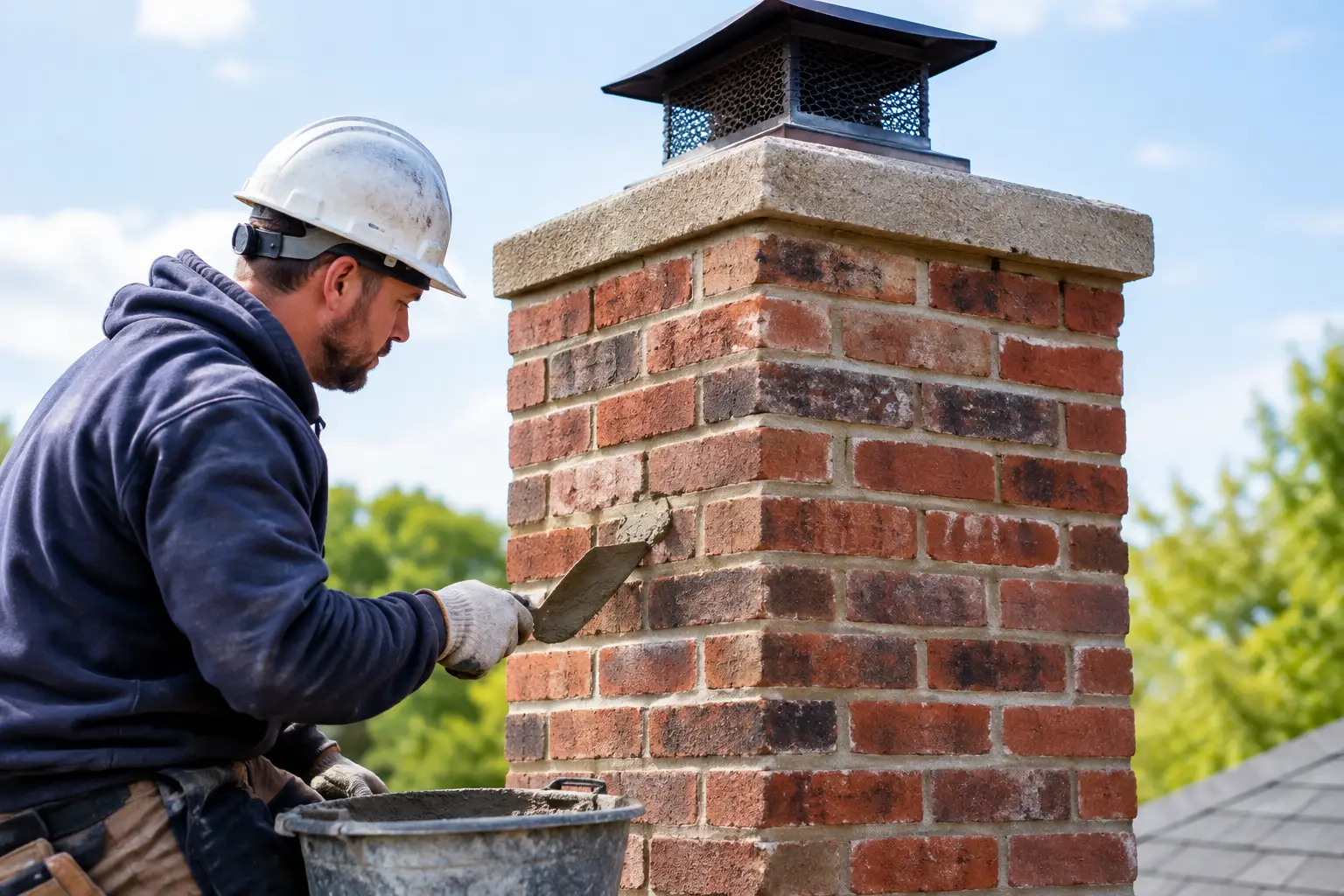
A chimney can look solid from the ground while the mortar holding its brickwork together is beginning to fail. In exposed parts of Aberdeen and Aberdeenshire, driving rain, frost and strong winds can wear away chimney joints faster than homeowners expect. This guide to chimney repointing work explains what the job involves, how to spot the warning signs, and why timely repairs can prevent a much larger roofing problem.
What chimney repointing work actually involves
Repointing is the process of removing loose, cracked or weathered mortar from between bricks or stone, then carefully replacing it with fresh mortar. The aim is not to cover over damage. A proper repair restores the strength of the joints, helps keep water out of the chimney structure, and improves its appearance.
Mortar is often the first part of a chimney to deteriorate because it is designed to be slightly more sacrificial than the brick or stone around it. Over years of weather exposure, it can become soft, porous or cracked. Once this happens, water can enter the joints, freeze during cold weather and widen the damage.
A chimney repointing job may also involve renewing damaged bricks, repairing the flaunching around chimney pots, replacing defective lead flashings, or addressing cracks in the stack itself. These are separate issues, but they are commonly found during a close inspection. The right scope of work depends on the chimney’s condition, not on a one-size-fits-all repair.
Signs your chimney may need repointing
The most obvious sign is mortar that is missing, crumbling or recessed deeply behind the face of the brickwork. You may notice small pieces of mortar on the roof, in the guttering or on the ground below. However, many chimney defects are not easy to see safely from ground level.
Damp marks on an upstairs wall or ceiling can also point to a chimney problem, especially after prolonged rain. This does not automatically mean the mortar joints are at fault. Damaged flashing, failed chimney pots, a poor chimney cowl fitting or defects to the roof covering can cause similar symptoms. A thorough inspection is the sensible starting point.
Other signs worth acting on include loose bricks, vegetation growing from joints, leaning chimney pots, visible gaps around the base of the stack, or staining on the external brickwork. If a chimney has been capped off after a fireplace was removed, it still needs ventilation and weather protection. A sealed chimney can trap moisture and create problems inside the property.
Why putting off repointing can cost more
Weathered mortar allows water into areas that should remain protected. In a mild spell, this may seem like a minor issue. When temperatures drop, trapped water expands as it freezes, loosening more mortar and sometimes damaging the surrounding brickwork. What could have been a straightforward repointing repair can become a job involving brick replacement or partial rebuilding.
A weakened chimney also puts additional pressure on the roofline. Falling mortar or brickwork can damage slates, tiles, gutters and flashing below. In more serious cases, an unstable stack can become a safety concern, particularly after a period of high winds.
There is a balance to strike. Not every old mortar joint needs immediate replacement, and repointing sound areas unnecessarily is poor practice. The priority is to repair joints that are genuinely failing and identify the reason they have deteriorated. This keeps the work proportionate and helps protect the property for the long term.
How a professional chimney repointing repair is carried out
Safe access comes first. Depending on the height, roof pitch and condition of the chimney, this may involve scaffolding or another suitable access method. Chimney work should not be treated as a quick ladder job. Good access allows the repair to be completed safely and gives the tradesperson a proper view of the whole stack.
The defective mortar is then raked out to a suitable depth without damaging the brick or stone edges. This stage matters because new mortar applied over loose material will not last. The joints are cleaned out before the fresh mortar is pressed in and finished to suit the existing masonry.
Choosing the correct mortar is equally important. Older properties may need a more breathable lime-based mortar rather than a hard modern cement mix. Using mortar that is too strong can trap moisture and cause damage to softer historic brickwork or stone. On newer chimneys, a suitable cement-based mix may be appropriate. An experienced contractor will assess the property rather than applying the same material to every job.
Once the joints are repaired, the chimney should be checked for related defects. This includes the lead flashing where the stack meets the roof, the condition of the pots and cowls, the flaunching at the top, and any damaged bricks. Completing necessary repairs together can avoid repeated access costs later.
Chimney repointing work and the Scottish weather
Chimneys in the north-east of Scotland take a beating. Wind-driven rain can reach parts of a stack that are normally sheltered, while repeated wet and freezing conditions are hard on mortar joints. Coastal areas and exposed rural properties can be particularly vulnerable.
That does not mean every chimney needs regular wholesale repointing. It does mean small defects should be dealt with before another winter adds to the damage. A visual roof and chimney inspection after storms, or when arranging other roof maintenance, is a practical way to catch problems early.
Timing also matters. Mortar needs suitable conditions to cure properly, so very cold, wet or frosty weather can affect the programme. A reputable contractor will advise if conditions mean work should be delayed or protected, rather than rushing through a repair that may not perform as it should.
What affects the cost of chimney repointing?
There is no reliable fixed price for chimney repointing because access and the extent of deterioration make a significant difference. A small area of failed mortar on an accessible stack is very different from a full repointing job on a tall chimney requiring scaffolding.
The main factors are the size and height of the chimney, how much mortar needs removed, the condition of the bricks or stone, the mortar type required, and whether related repairs are needed. Replacing flaunching, renewing leadwork, refitting pots or rebuilding a damaged section will add to the scope. Scaffolding can also be a sizeable part of the cost, but it is often essential for safe, lasting work.
Be wary of a price offered without anyone properly inspecting the chimney. A clear quotation should explain what will be repaired, what materials are proposed, whether access is included, and whether any additional defects have been identified. This helps avoid surprises and makes it easier to compare like for like.
Can chimney repointing be a DIY job?
Small masonry repairs at low level are one thing, but chimney repointing is usually not a suitable DIY task. Working at roof height brings obvious risks, and it is difficult to judge the full condition of a stack from a ladder. There is also a real risk of using the wrong mortar, damaging bricks while raking out joints, or missing failed flashing that is causing the leak.
A professional inspection can establish whether repointing is the answer or whether the chimney needs a different repair. Waterston Roofing & Building carries out practical chimney and roofing inspections across Aberdeen and Aberdeenshire, with clear advice and no-obligation quotations for suitable work.
Looking after a repaired chimney
After repointing, keep an eye on the chimney as part of normal exterior maintenance. Clear gutters and valleys so water is not backing up around the roof, and arrange checks following major storms if you notice new dampness, slipped slates or debris below the stack. Avoid applying waterproof coatings without advice, particularly on older masonry, as some treatments can restrict the wall’s ability to breathe.
A well-repaired chimney should not demand constant attention. The value of good repointing is that it addresses the vulnerable joints properly, giving the stack a better chance of standing up to years of Scottish weather. If you are unsure what you are seeing, a close inspection is safer and more useful than waiting for a small gap in the mortar to become a leak or a loose brick.
Comments are closed